Brick, Ocean County
Aging in Place in Brick, NJ: Home Projects That Fit the House
Aging in place in Brick, NJ often means making a house built for a busier household work for a slower, less steady one. Brick's mix of postwar cottages and 1970s homes tells you where to start. Here is how the housing breaks down and what each type usually needs.
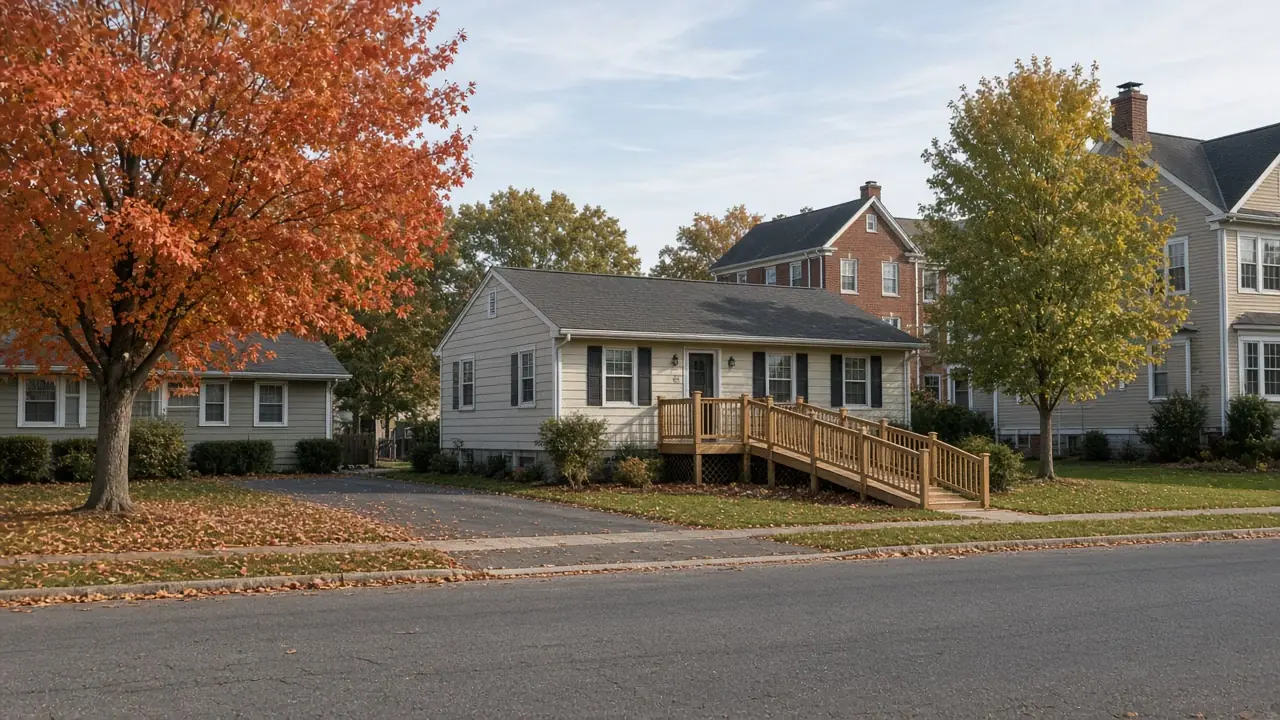
Home modifications in Brick
Pick the job that matches the problem in your house. Most Brick households start with a bathroom or a doorway, then handle entries, stairs and bars.
Accessible bathrooms and walk-in showers
See detailsStairlifts and home lifts
See detailsWheelchair ramps
See detailsDoorway widening
See detailsGrab bars and handrails
See details
In Brick, local help with aging services comes from Ocean County Office of Senior Services.
Questions people ask
Who handles lift permits in Brick?
Brick lists local elevator subcode jurisdiction. That means stairway chairlift and platform lift permits go through the township's own construction office instead of the state.
Are pre-1960 Brick houses harder to adapt?
They take more planning, because rooms and doors are smaller and walls may be plaster over lath. They can still be adapted. A set of photos of the bathroom, the stairs and the entry helps a contractor scope the job before a visit.
Where can a Brick resident ask about senior programs?
Ocean County Office of Senior Services is the Area Agency on Aging office the state lists for the county. Ask them what home repair and modification programs you may qualify for before you sign a contract.
Which project should a Brick household do first?
Start with the place where the last fall or near-fall happened. For most people that is the bathroom, a doorway they squeeze through or the stairs. Fix that first, then work outward.
Does Aging in Place NJ do the work itself?
No. We help you plan the changes and connect you with a local contractor for the job. We are not a contractor, dealer, medical provider or funder.
Homes in Brick
The median Brick home was built in 1976. More than half of housing units predate 1980, and many predate 1960. The oldest group is where the work gets most involved. Postwar capes and cottages tend to have narrow halls, small baths and a few steps at every door.
Single-family houses are most of the units, so most households have a driveway or yard to work with. Most occupied homes are owner-occupied. Condominiums, townhouses and rentals make up the rest, and in those a ramp or a rail needs a yes from an association or a landlord first.
Residents 65 or older make up 21.4% of the town. That is roughly one neighbor in five. Many are planning for a spouse or parent who wants to stay put, and adult children are welcome to ask questions on the family's behalf.
Source: Census Bureau, median year built and age
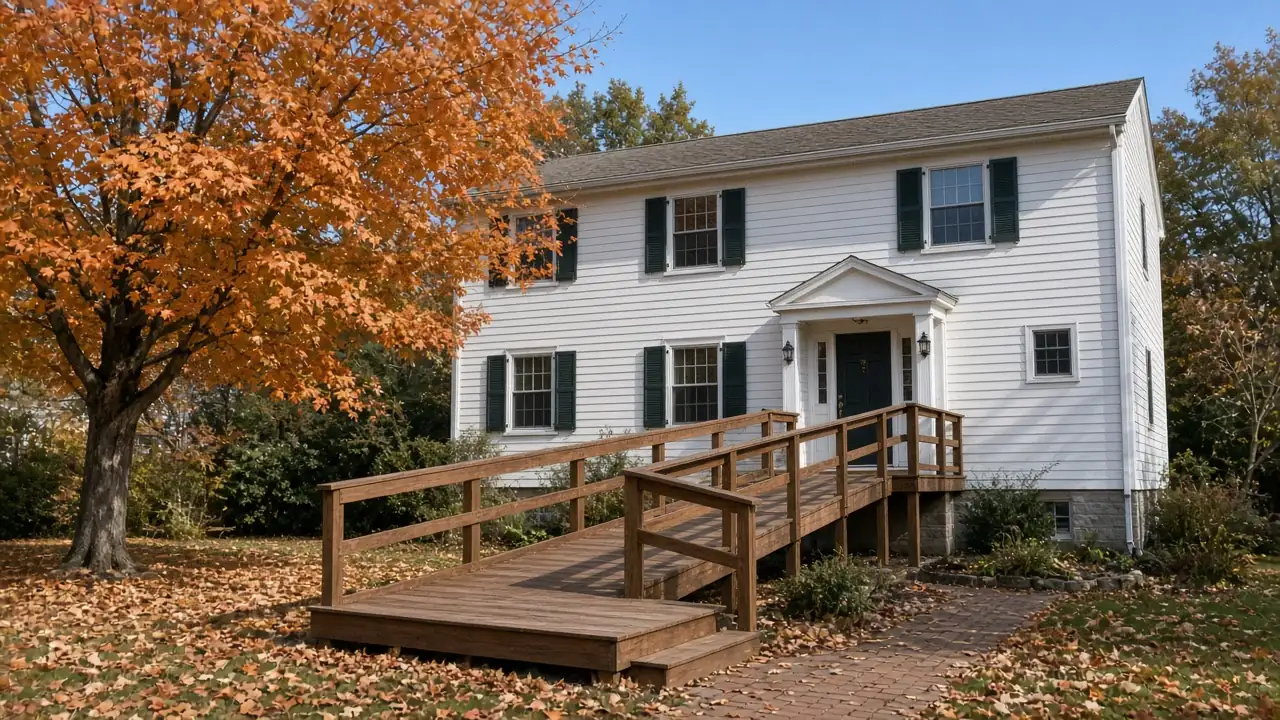
Aging in place in Brick, NJ: three kinds of house, three starting points
A 1950s cape, a 1970s split-level and a townhouse in a managed community do not need the same things. Sorting yours first saves money later.
The postwar cottage or cape
These are the houses behind the 21.3% built before 1960. Start with doorway widening in Brick and the bathroom layout. Halls are tight, and a walker that fits the front room may not fit the bath door.
Source: Census Bureau, year built and median year built
The 1970s colonial or split-level
Rooms are bigger and walls are usually drywall on regular framing. The pressure point is the staircase. Many of these homes have bedrooms upstairs and a laundry or den below, so stairlift installation in Brick is often the first call.
The condo or townhouse
Here the unit is yours and the building is not. Plumbing stacks, entry steps and railings may belong to the association. Ask what you can change before you plan anything.
Home modifications in Brick: a sensible order for the work
When several things are wrong at once, the order matters. This sequence works for most households.
- Fix the place where someone has already slipped or stumbled.
- Make the bathroom safe to enter, sit in and leave.
- Clear the path from the bedroom to the bathroom, wide enough for the aid in use.
- Level or ramp the main entry, or the garage entry if it is simpler.
- Add bars and handrails where hands naturally reach.
- Deal with stairs last, since a lift is the biggest single purchase.
Falls are the reason for most of this. CDC reports that 1 in 4 older adults fall every year. In New Jersey, falls were the leading cause of unintentional injury death for residents 60 and older in 2024. The grab bars and handrails step is cheap and quick, so many families do it right away while the larger jobs are planned.
Sources: NJ Human Services, CDC
Our 100% Guarantee
- Asking is free. It never commits you to anything.
- We charge you no fee for planning or the introduction.
- You pay only the contractor you choose, at their written price.
- Your $100 credit is honored on your first booked project.
- Not happy with an introduction? Say so, and we will find you another at no charge.
Small print: This guarantee covers our planning and introduction service. The contractor's work is covered by your contract with them. Offer terms. Guarantee terms.
Aging in Place NJ · (315) 640-3590
Owner, condo resident or renter in Brick: who decides
With 82.2% of occupied homes owner-occupied, most Brick readers can decide for themselves. That still leaves thousands of households who cannot.
If you rent, you need the landlord's written approval before anything permanent goes in. If you live in a community run by a homeowner association, the association usually controls the exterior, the common stairs and the shared walls. New Jersey's housing supports rules for Medicaid members say modifications to common areas of those buildings are the responsibility of the owner or association, and a renter needs a written approval letter from the property owner.
Sources: Census Bureau, owners and renters, NJ Medicaid
Ask early, in writing. A short note with a photo and the exact item, such as a rail on one side of a shared stoop, gets a faster answer than a phone conversation.
Ocean County programs to ask about before you pay
Ocean County has more than one program that touches home safety. Eligibility varies, so treat this as a list of questions, not a promise.
- The Respite Care Program, run through the Office of Senior Services, can include minor home modifications and ramp installation for adults 60 and older who have an unpaid caregiver.
- Senior Assisted Social Services provides home modifications for county residents 60 and older, with recommendations made after a home inspection.
- The county's senior services FAQ says volunteer groups help with jobs such as grab bars and widened doorways, and build ramps.
- The Catholic Charities Fix-It Program in Brick does minor repairs for seniors 60 and older who live independently in Ocean County.
Source: Ocean County
Contact the Ocean County Office of Senior Services in Toms River first. If a program can do the job, that may be your answer. If it cannot, or the wait is long, we can help you plan the work and connect you with a local contractor. Our page on ways to pay for home modifications in New Jersey lays out the rest.
Brick keeps its own elevator office, and what that means for a lift
Most nearby towns send lift paperwork to the state. Toms River, Berkeley and Manchester are listed that way. Brick is listed as local, so the township has its own elevator subcode official.
New Jersey's elevator subcode counts stairway chairlifts and wheelchair lifts as elevator devices. In practice, a Brick homeowner deals with the township construction office, not a state inspector. Your contractor files the paperwork. You should still ask who is doing it and when.
If you are weighing a lift, the full picture is on our page about stairlifts and home lifts in Brick.
What to get in writing from a Brick contractor
Whoever does the job, a few protections apply across New Jersey.
- A home improvement contract over $500, and any change to it, must be in writing and signed by everyone, with the total price stated.
- You can cancel for any reason until midnight of the third business day after you get a copy.
- The state's license verification portal lets you look a business up before you sign.
- Plumbing and electrical work must be done by people licensed for those trades.
Sources: NJ Legislature, NJ Consumer Affairs
Our page on the three-day right to cancel in New Jersey explains the cancellation notice step by step.
Brick and the towns around it
Brick sits next to larger Ocean County neighbors. If you or a relative live nearby, see our pages for aging in place in Toms River and Berkeley Township. Their housing and lift offices differ from Brick's, so do not assume the same answers carry over.
Ready to start? Send the short form or call (315) 640-3590. We will ask about the house and the problem, then talk through the first project.
Also serving nearby
Ready to plan it?
$100 off your first project. Call or send a request.