Grab bars and handrails
Grab bar and handrail installation in New Jersey
Grab bar installation in NJ is a good place to start. A few well-placed bars and a rail on the stairs are often the first change a household makes, and it is a small job for a local contractor.
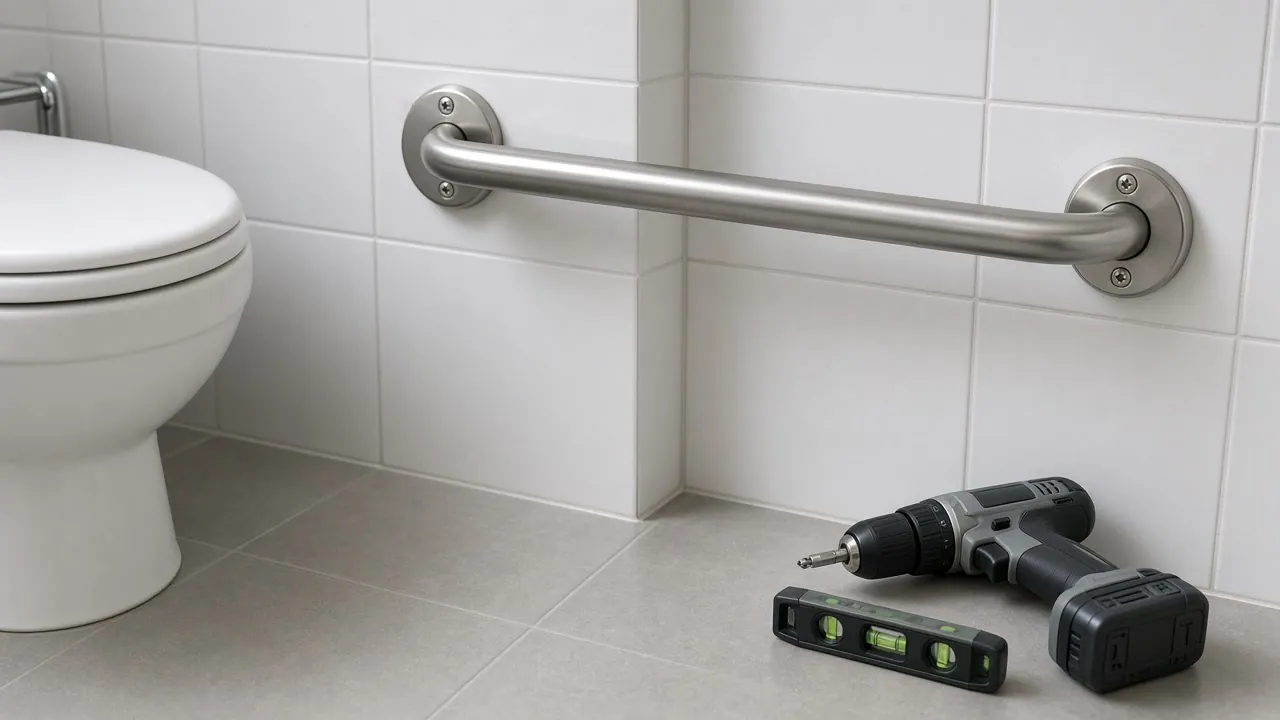
What grab bars and handrails work can include
Bars at the tub and shower
A vertical bar by the entry, and horizontal bars on the long wall, give your hand something solid to find on the way in and out.
Bars beside the toilet
A bar at the side or behind the toilet helps with standing up, and a fold-up version can be added where wall space is short.
Stair handrails
A sturdy rail on both sides of the staircase, running the full length, so a hand is on the wall from the first step to the last.
Entry and hallway rails
A rail at the front steps, beside the door or along a long hallway adds steadiness anywhere that the floor changes level.
Questions people ask
Are suction-cup bars good enough?
No. A suction bar can release under weight, and a towel rail is not made to hold a person. A bar screwed into framing is the only kind to rely on.
Where should a bar go?
It depends on how you move. Ask the contractor to watch how you step, sit and reach, then position the bars to match.
Will grab bars look institutional?
Not if you pick well. Many now come in satin, bronze and white finishes, and some double as towel bars or shelves.
How long does fitting take?
A few bars in one bathroom are a small job. A long stair rail takes longer, and the contractor will state the time in the quote.
Can I claim the cost on my taxes?
The IRS lists handrails and grab bars among accessibility improvements whose cost can count as medical expenses, subject to its limits. Check with a tax adviser for your case.
Does Medicare pay for grab bars?
Original Medicare lists grab bars as a denied item. Because the cost is modest, many households simply pay it directly.
What changes the price
- Number and length of bars. A pair at the tub is a small bill, a full staircase rail much larger.
- What the wall is made of. Tile and stone take more time to drill than drywall.
- Whether solid backing already sits behind the wall or has to be added.
- Finish and style, from plain steel to brushed or colored coatings that match the bathroom.
- Rail material and length on stairs, including brackets and returns at the ends.
- Whether the bars are installed with other work in the same visit.
The permit point
Putting in bathroom accessories such as grab bars is listed as ordinary maintenance in New Jersey's construction code.
Source: NJ Administrative Code
Signs this job fits
- You steady yourself on a towel bar, a sink edge or the shower door, and none of them is built for it.
- Getting up from the toilet takes a push with both hands.
- Someone has put a handrail on only one side of your stairs.
- You are new to a walker or cane and the bathroom is the first test.
- You want a simple change now while you plan something larger.
Our 100% Guarantee
- Asking is free. It never commits you to anything.
- We charge you no fee for planning or the introduction.
- You pay only the contractor you choose, at their written price.
- Your $100 credit is honored on your first booked project.
- Not happy with an introduction? Say so, and we will find you another at no charge.
Small print: This guarantee covers our planning and introduction service. The contractor's work is covered by your contract with them. Offer terms. Guarantee terms.
Aging in Place NJ · (315) 640-3590
How the job goes
Tell us where your hands reach
Describe the spots that feel unsteady: getting out of the tub, rising from the toilet, the top step. These tell the contractor where bars belong.
A visit and a price
The contractor checks the walls, finds the studs behind tile or drywall and writes up a price, usually for a handful of bars at a time.
Fitting
Ask that each bar be anchored into framing or solid blocking, not just a wall plug, and tested before the contractor leaves.
Add more later
Because the job is small, it is easy to add a bar later as your needs change. Your $100 applies to the first project booked.
Find grab bars and handrails in your town
Grab bar installation in NJ: where each bar goes
The CDC's home safety checklist advises bars next to and inside the tub, and next to the toilet. That is the right starting list. Where exactly each bar sits depends on how you move.
A vertical bar by the tub edge gives your hand something to find as you step in. A horizontal bar on the long wall helps you lower yourself and stand. At the toilet, a bar on the side wall helps you push up.
Ask the contractor to watch you step, sit and reach, then mark the spots. An occupational therapist can also advise on placement.
Studs, blocking and tile: how a bar stays put
A bar is only as strong as what holds it. Plastic wall plugs pull out. A suction bar can release under weight. A towel rail is not made to hold a person.
A sound installation fixes the bar into a stud or into solid blocking behind the wall. The contractor finds the framing, even behind tile, and drills with the right bit so the tile does not crack. If the wall has no backing, it can be added.
Ask that each bar be tested with real weight before the contractor leaves.
Handrail installation on stairs and at the door
The CDC also advises handrails on both sides of the stairs, for the full length. Many houses have a rail on one side only, or a rail that stops short of the last step.
Look at three things. The rail should run from the first step to the last. It should be easy to wrap a hand around. And it should be fixed to framing, not just to plaster. Add a rail at the front steps, too, if you feel unsteady outdoors.
If the stairs are the real problem, see stairlifts and home lifts.
Choosing a finish so the bathroom still feels like home
Bars come in satin, bronze, white and other finishes, and some double as shelves or towel holders. Choose a finish that matches your faucet. A bar that looks like part of the room is easier to accept, for you and for a parent who worries about a clinical look.
Pick a style that is easy to grip when your hands are wet. Smooth, round bars suit most people.
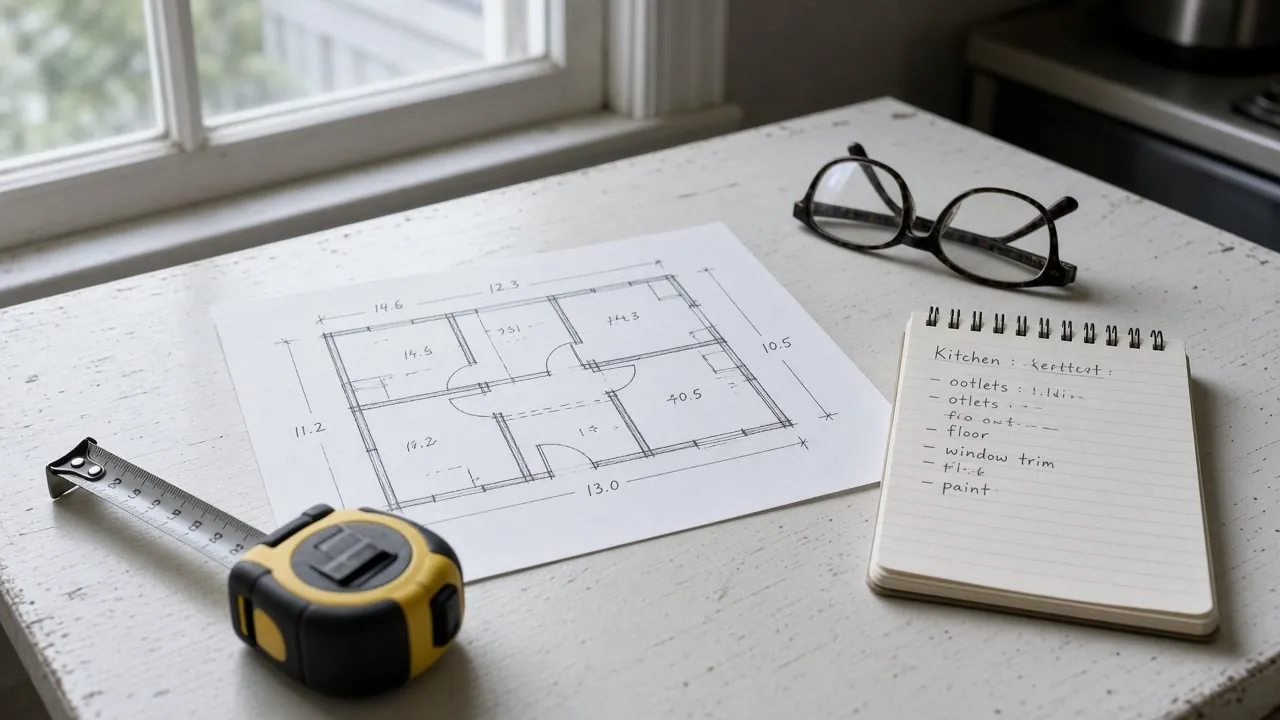
A small job that often leads to a bigger plan
New Jersey's falls profile reports that in 2024 falls were the leading cause of death from unintentional injury among residents 60 and older, with 574 deaths and 22,027 hospital admissions. Bars cannot prevent every fall, but they are a low-cost step.
Source: NJ Human Services
While the contractor is there, ask what else they notice. A tub wall that is too high may call for an accessible bathroom remodel. A door that scrapes a walker may call for doorway widening.
Reference heights, bar sizes and clearances
The ADA Standards do not govern private homes, but they give useful numbers to ask a contractor about. They place horizontal grab bars 33 to 36 inches above the floor, and handrails 34 to 38 inches above the stair edge.
Source: U.S. Access Board
A round bar should be 1 1/4 to 2 inches across, so a hand can close around it, with 1 1/2 inches between the bar and the wall. A bar and its fasteners should hold 250 pounds of force.
Treat these as a starting point. Your own height, reach and balance may call for something different.
Light and grip: the other half of a safe stair
The CDC checklist advises a light and a switch at both the top and bottom of the stairs, installed by an electrician. It also suggests a non-slip mat or strips in the tub and a nightlight on the path from bed to bath.
These small items cost little and can be done at the same visit as the bars. Ask the contractor to quote them as separate lines.
Renting, or only need it for a while
If you rent, ask the owner for written permission first. Bars leave screw holes, and a landlord may ask that they be patched at move-out.
If the need is short, such as after surgery, a few bars may be enough, and they are useful for years afterward. Ask an occupational therapist where to place them. It is a small job that makes the next stage easier to plan.
Permit, tax and Medicare notes
Installing bathroom accessories, including bars, is listed as ordinary maintenance in the state code. The IRS lists grab bars and railings among improvements that can count as medical expenses. Original Medicare lists grab bars as denied. Ready for a price? Call or use the form, and $100 comes off the first job.
Sources: NJ Administrative Code, IRS Publication 502
Ready to plan it?
$100 off your first project. Call or send a request.