Brick, Ocean County
Grab Bar Installation in Brick, NJ: Finding Solid Wood Behind the Wall
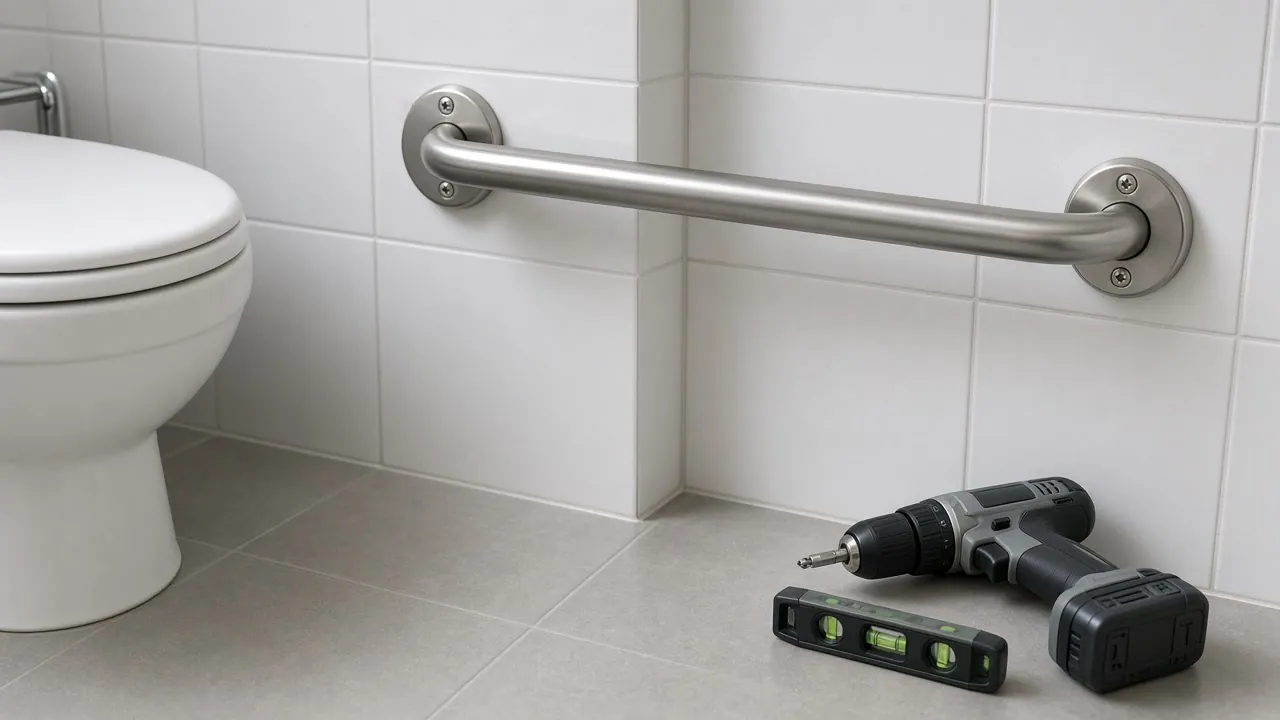
Grab bar installation in Brick, NJ is a small job with a big safety payoff, as long as the bar is anchored into something solid. In a cottage with tile over plaster and lath, that means finding the stud. In a 1970s home, it usually means choosing the right spot.
Your house in Brick
- Tile over plasterThe bar must reach a stud or added backing, not just the tile.
- A stoop with no railOne sturdy rail is a simple, high-value fix.
- A stair with a rail on one sideAdd a second rail so both hands have support.
- Fiberglass or cultured marble surroundMount through the wall into backing, never into the shell alone.
Questions people ask
Can a grab bar be fitted over old tile?
Yes, when it is fixed into a stud or added backing. Tile and plaster alone will not hold a person's weight.
How many Brick residents are 65 or older?
About 16,151 of Brick's 75,482 residents, or 21.4%, according to the Census Bureau's 2020-2024 estimates.
Can I use a suction cup bar instead?
A suction bar can release without warning, so it is not a substitute for a bar fixed to the structure. Use it only as a temporary aid, if at all.
How high should a grab bar go?
ADA reference dimensions put a horizontal bar 33 to 36 inches above the floor. Your height, your reach and how you move may call for a different spot, so test with the person who will use it.
Can Ocean County help with grab bars?
The county's senior services FAQ says volunteer programs help with jobs such as installing grab bars. The Catholic Charities Fix-It Program in Brick also does minor repairs for seniors 60 and older.
Source: Census Bureau, age
Grab bars and handrails in Brick
In a 1950s Brick house, the bathroom wall may be tile over plaster over lath. That is a poor anchor for a grab bar unless the fastener reaches the stud behind it. Studs in older homes are not always evenly spaced, so the contractor locates them first and places each bar to match.
The 1970s homes in town have drywall over regular framing, which is more forgiving. A bar can go almost anywhere along a stud line, and if it must sit between studs, solid backing can be added from behind or inside the wall.
The stairs are the other half. A cottage stoop with no rail, or a split-level with a rail on one side of a long stair, is common. With 16,151 residents in Brick aged 65 or older, many households will weigh these small fixes before the bigger ones.
The permit point
New Jersey lists installing bathroom accessories as ordinary maintenance. The contractor can confirm it for a grab bar.
Grab bar installation in Brick, NJ: where the bars go in a bathroom
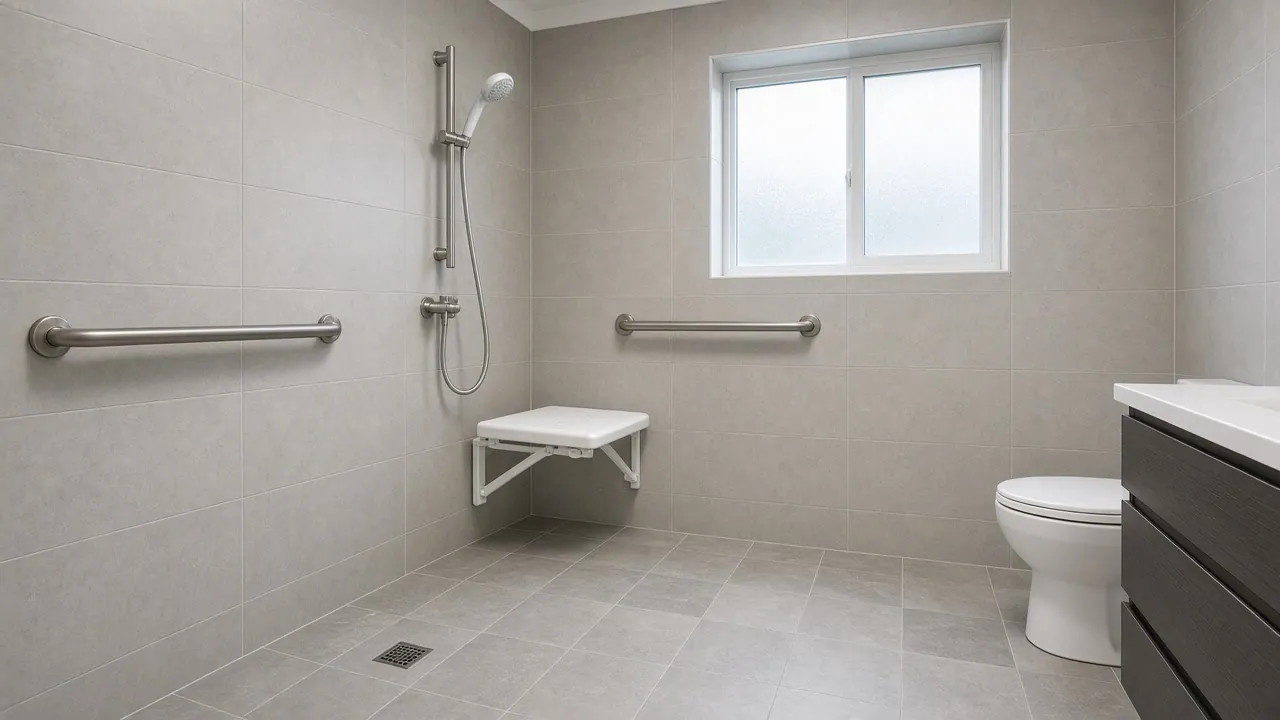
CDC's home safety checklist advises bars next to and inside the tub and next to the toilet. In practice, five spots cover most needs.
- A vertical bar at the shower or tub entry, to hold while stepping over.
- A horizontal bar on the long wall inside, for balance while standing.
- A bar beside the toilet, on the wall or a floor-mounted frame.
- A short bar by the sink if the person stands there to wash.
- A bar at the bathroom door, if the floor is often wet.
ADA reference dimensions put a horizontal bar 33 to 36 inches above the floor. The ADA does not apply to a private house, so use the number as a start and adjust to the person's height.
Sources: U.S. Access Board, CDC
Tile, plaster, fiberglass and drywall: how each wall holds a bar
The bar is only as strong as what it is screwed into. The ADA reference calls for a bar, its fasteners and the supporting structure to withstand 250 pounds in any direction. That load goes into the wall, not just the bar.
Source: U.S. Access Board
Tile over plaster and lath
Find the studs with a detector, then drill carefully through the tile with the right bit. Cracked tile near the bar is a sign to stop and add backing.
Drywall
Fix into studs or a plywood backing plate installed behind the drywall. Drywall anchors alone are not enough.
Fiberglass and cultured marble
These surrounds flex. The bar needs blocking behind, set when the surround goes in. This links to the plan in accessible bathroom planning in Brick.
Our 100% Guarantee
- Asking is free. It never commits you to anything.
- We charge you no fee for planning or the introduction.
- You pay only the contractor you choose, at their written price.
- Your $100 credit is honored on your first booked project.
- Not happy with an introduction? Say so, and we will find you another at no charge.
Small print: This guarantee covers our planning and introduction service. The contractor's work is covered by your contract with them. Offer terms. Guarantee terms.
Aging in Place NJ · (315) 640-3590
Handrail installation in Brick: stoops, interior stairs and basement flights
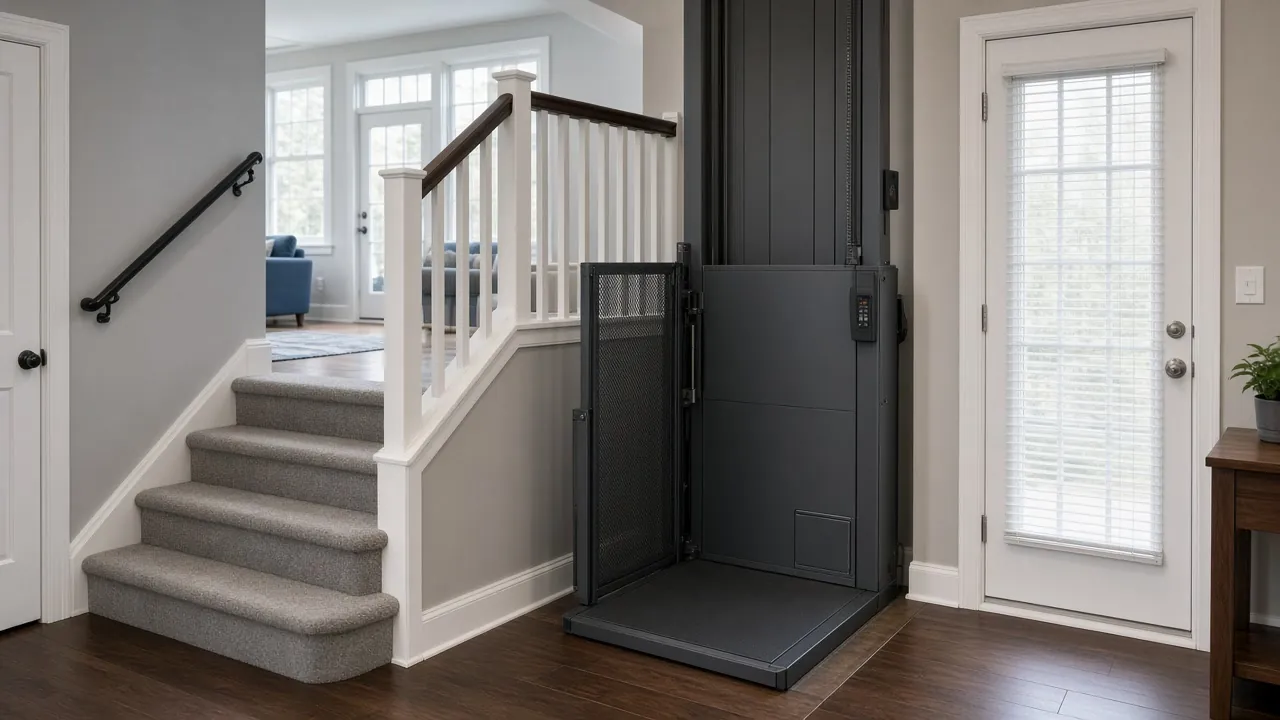
CDC advises handrails on both sides of the stairs for the full length. Many Brick houses fall short on at least one flight. Common gaps are the basement stairs, a three-step stoop and the second side of an interior stair.
The ADA's reference range puts the top of a handrail 34 to 38 inches above the stair nosing, with 1.5 inches between the rail and the wall. The rail should be continuous and graspable, with no sharp end that catches a sleeve.
Sources: U.S. Access Board, CDC
Mounting is the same story as a grab bar. The rail's brackets must reach the studs or a backer board. A rail that wobbles is worse than none, because people trust it.
If a stair is steep enough that a rail will not do, see stairlift installation in Brick.
A small job with a big gap to close: the falls numbers
CDC reports that 1 in 4 older adults fall every year, and that falls are the leading cause of injury for adults 65 and older. New Jersey's falls profile counts 574 deaths and 22,027 hospital admissions among residents 60 and older in 2024.
Sources: Census Bureau, age, NJ Human Services
Brick's 65-and-older population is 21.4% of the township. A grab bar costs far less than a hospital stay, and it takes a short visit to install. For many families it is the right first project, ahead of anything larger.
Do not wait for a fall. If the person is unsteady getting out of the tub, install bars now, then look at a wheelchair ramp in Brick or other work later.
Fix-It and volunteer help for grab bars in Ocean County
Ocean County's senior services FAQ says volunteer-based programs help older adults with minor repairs such as installing grab bars. The county's 2025 to 2026 Housing and Resource Directory lists the Catholic Charities Fix-It Program (Hands for All) in Brick, which does minor repairs for seniors 60 and older who live independently in Ocean County.
Source: Ocean County
Ask the Office of Senior Services whether a volunteer can do your bars and how long the wait is. If you want the work done sooner, or the wall needs added backing, we can help you plan it and connect you with a local contractor.
Suction bars, towel racks and other things that are not grab bars
A towel rack is not made to take a falling adult. A suction-cup bar can let go under load. Neither belongs on a safety checklist.
The test is simple. A true grab bar is fixed into the structure, is sized to be gripped and is tested by hanging your weight on it before anyone trusts it. If a contractor cannot say what the bar is anchored to, ask again.
For the permit side, New Jersey lists bathroom accessories, benches and seats as ordinary maintenance. Confirm the details with the contractor.
Source: NJ Administrative Code
Grab bars and handrails in nearby towns
Ready to plan it?
$100 off your first project. Call or send a request.